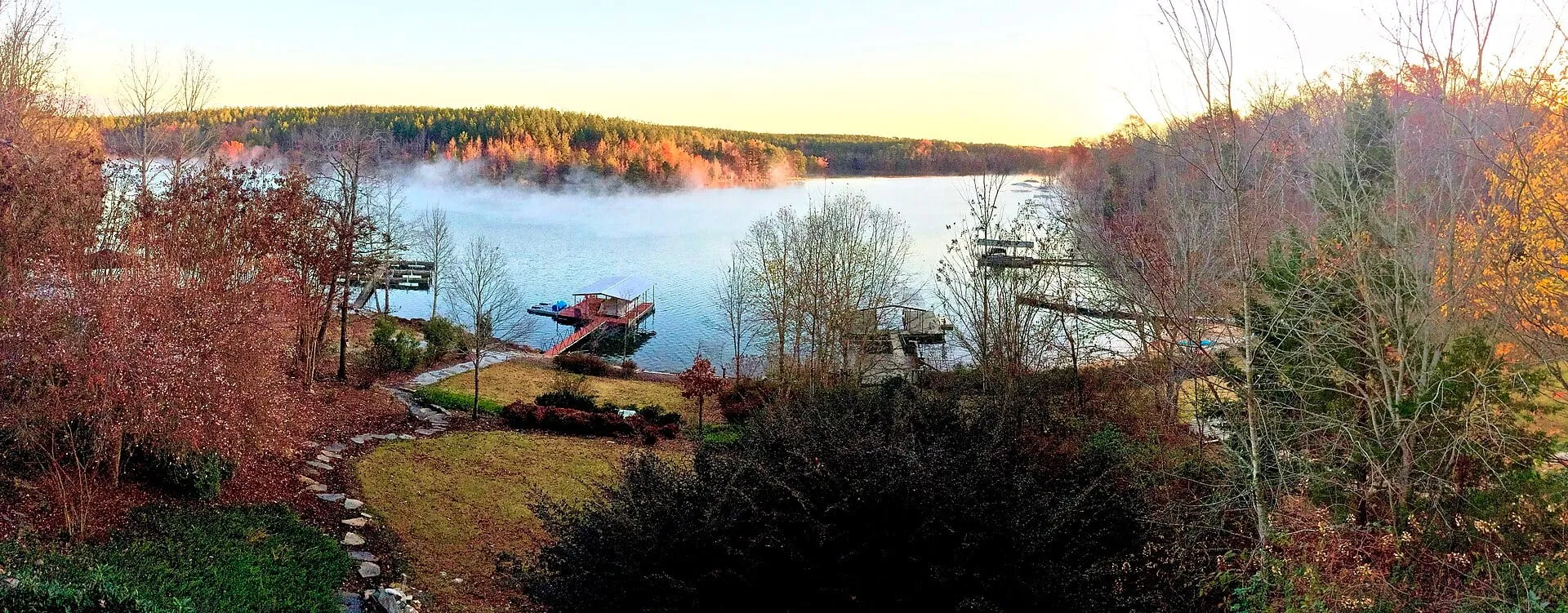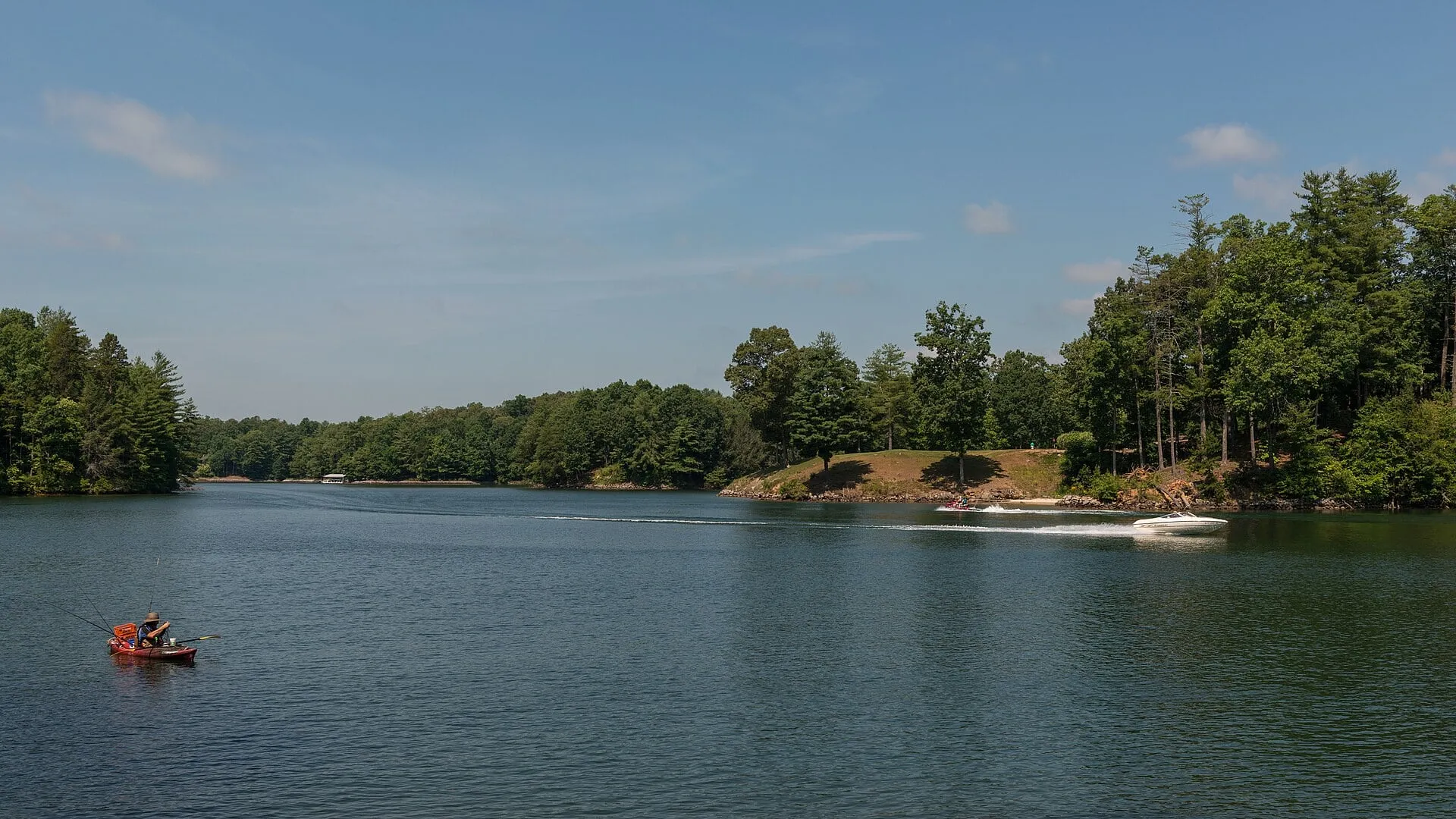
A stump on a lake lot is rarely just a stump. The ground usually slopes toward the water, the soil is red clay that washes easily, and the shoreline itself may be managed by someone other than you.
This guide covers what to sort out before grinding near Lake Keowee or Lake Hartwell, and how to protect the slope, the water and your waterfront structures while the work is done.
Check who manages the shoreline
Before anyone cuts or grinds near the water, find out who has a say over that ground. On both lakes, the answer is not only you.
Lake Keowee and Duke Energy
Duke Energy manages the Lake Keowee shoreline. It has rules about what can be cut, cleared or built near the water, and vegetation in the shoreline buffer may need approval before it’s removed. Check with Duke Energy before taking out trees or stumps close to the shoreline. Our Lake Keowee page has more on stump grinding around Keowee.
Lake Hartwell and the Corps of Engineers
The US Army Corps of Engineers manages the Lake Hartwell shoreline. Along much of the lake, there’s a strip of government land between private lots and the water. Cutting or clearing on that land without permission isn’t allowed, even if it looks like part of your yard.
Contact the Corps’ Hartwell Lake office before doing any work past your property line. Check your plat or survey so you know where that line is.
HOAs and community rules
Many lake neighborhoods have their own architectural review or HOA rules about tree removal. Check those too, and get any approvals in writing before booking work near the water.
Why grinding beats digging on slopes
On a slope, the roots of a dead tree are still doing a job. Its lateral roots spread out through the top layer of soil and hold it in place. When a stump is ground, those roots stay where they are and keep holding soil while they slowly decay. That gives new plantings years to root in and take over.
Digging the stump out does the opposite. It rips out the root mass and leaves a large hole of loose clay on a hillside. One summer thunderstorm can carry a lot of that soil downhill and into the lake. If you’re weighing the two, our guide to stump grinding vs stump removal explains the trade-offs in more detail.
Erosion and red clay runoff
Upstate red clay holds together when it’s covered and washes away when it’s bare. Rain on exposed clay sends muddy orange water straight into the nearest cove.
After grinding, cover the bare soil quickly. Raking the grindings back into the hole helps, and spreading mulch or straw over any scuffed ground helps more. Plant groundcover or native shrubs where you can. Don’t leave a patch of bare clay through a season of storms.
Near the water, haul-off can be the better choice for the grindings. Loose chips on a steep slope can wash down toward the shoreline in heavy rain, and you don’t want them in the lake.
Access on steep lots
Lake lots often drop sharply from the road to the water, with stairs, retaining walls and narrow paths in between. Access is the single biggest variable in a lakefront stump job.
When you ask for a quote, tell us:
- How the stump is reached from where a truck can park.
- The narrowest gate or gap along the way.
- Whether the path is grass, gravel, steps or bare slope.
- Roughly how steep it is: an easy walk, a careful walk or hands on the ground.
Photos taken from the top of the slope looking down, and from the stump looking back up, tell us more than any description. Our guide on how to measure a stump covers the rest.
Protecting seawalls, riprap and docks
Stumps close to a seawall or riprap need care. Roots can be tied into the stone or wrapped around the back of a wall, and pulling them out could loosen it. Grinding takes the stump down without disturbing what’s next to it, and roots that run under the wall can be left alone.
Tell us what the wall is made of and how close the stump sits. Point out dock power and water lines too. SC811 doesn’t mark private lines like a power run to a dock, irrigation or invisible dog fence. We request an SC811 locate before grinding, but you’re the one who knows where the private runs go.
Getting it quoted
A photo and a rough measurement are enough to start. Include a wide shot that shows the slope and the water, note the distance from the stump to the shoreline or wall, and mention any approvals you already have.
Then get a quote and we’ll take it from there.