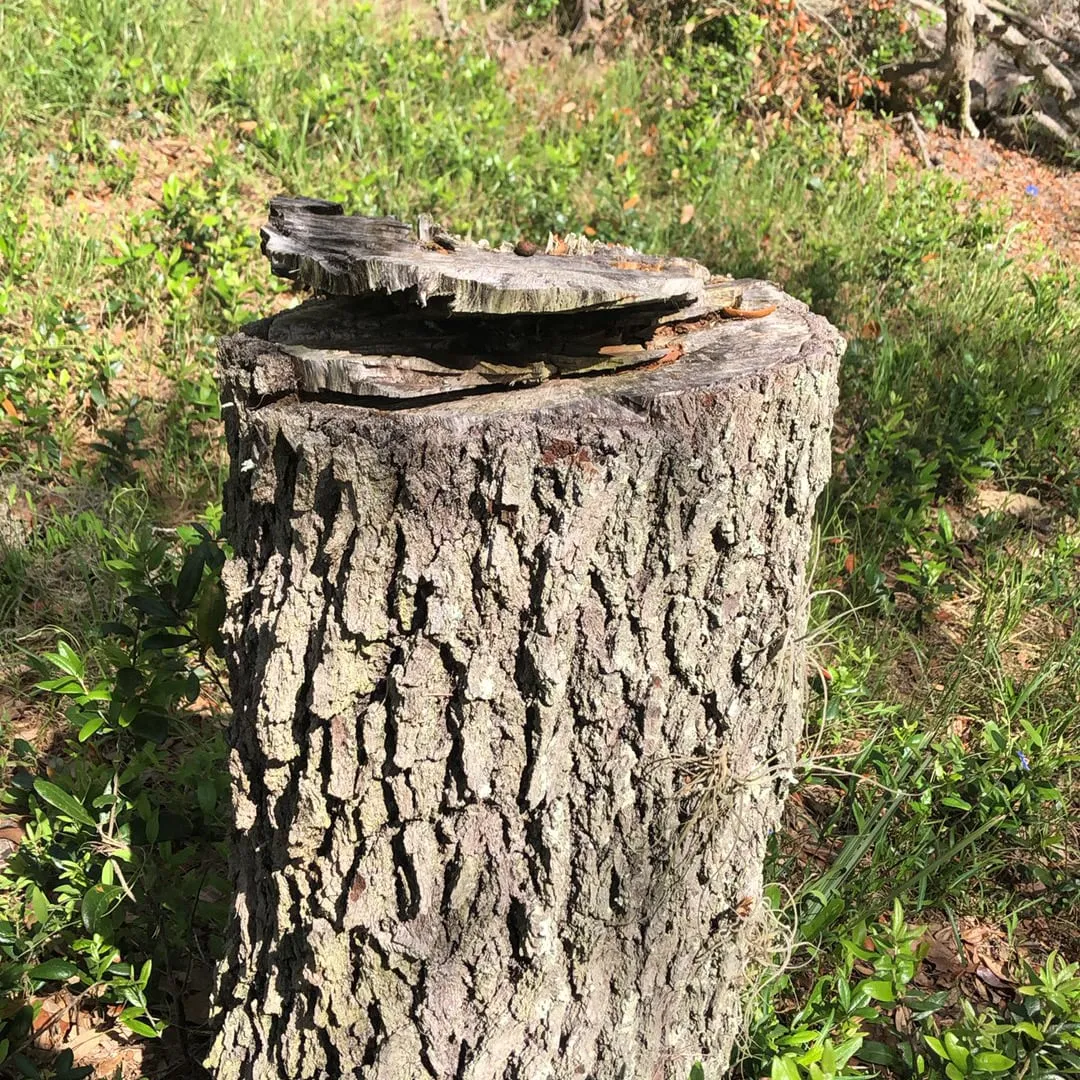
What full stump removal is
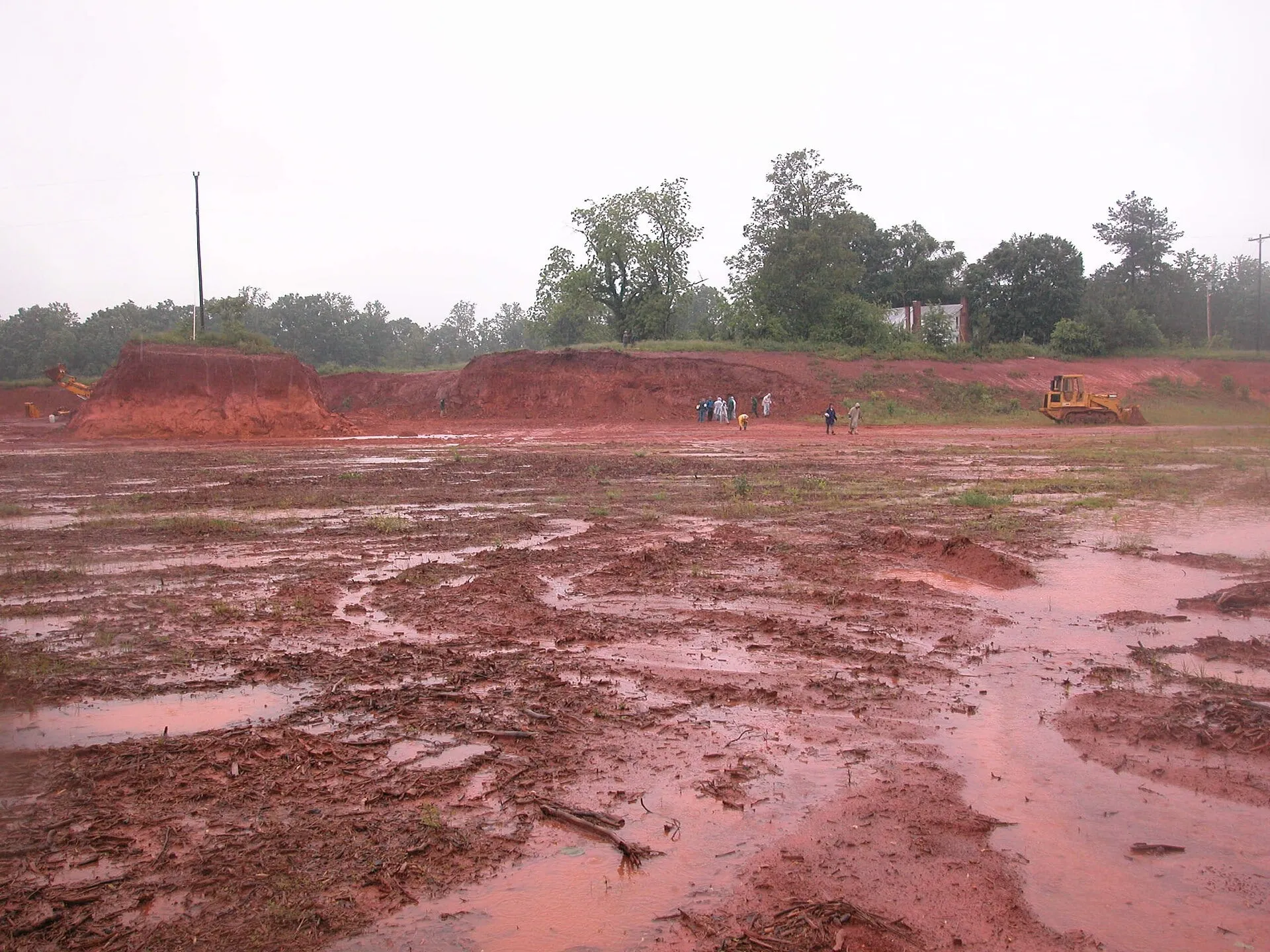
Stump removal takes the whole stump out of the ground, along with its main roots. It’s a bigger job than grinding. Instead of a shallow bowl of chips, you’re left with a hole that can be several times the width of the stump, and a root ball that comes out of Upstate red clay heavy with soil.
For most yards, that’s more than you need. Stump grinding gets rid of the stump below the surface for less money and far less mess. Removal earns its cost when the ground has to carry something.
When removal is worth it
- Footings and additions. Porches, garages and room additions need solid ground, not decaying wood.
- Pools. In-ground pool excavation needs to be clear of big roots.
- Driveways, patios and slabs. Buried wood rots and settles, and concrete over it can crack.
- Septic fields. If a new system or drain field is planned where the stump sits, the installer will tell you what has to come out.
- Retaining walls. A wall footing running through an old stump has a weak spot built in.
If you’re not sure, ask your builder. Sometimes grinding deeper than usual is enough, and we can do that on request.
For pavers, a garden bed or a small shed on blocks, a deep grind often does the job. For anything poured or load-bearing, follow what your builder or engineer specifies. Our comparison of stump grinding vs stump removal covers the trade-offs in more detail.
How the job goes
Before. Send photos of the stump and the area around it, a rough measurement and a note on what’s being built. Plans or a site sketch help. We request an SC811 locate before any work starts, and you flag the private lines that 811 doesn’t mark, like irrigation, septic laterals or a power run to a shed.
On the day. The stump and its main roots come out. The root ball and wood are dealt with as agreed on the quote.
After. The hole has to be filled and compacted in layers. Red clay holds water, so an open hole after a storm can turn into a pond, and wet clay backfill stays soft. Plan the fill with your builder, especially if anything structural is going on top, and allow time for it to settle.
If the hole has to sit open for a while, cover it or fence it off so nobody steps in, and so rain doesn’t turn it into a pond.
What affects the price
Removal is usually priced by the job rather than by the inch alone. The main factors are:
- The size of the stump, and how far its main roots spread.
- Tree type. Oaks and other hardwoods hold on harder than pine.
- Access for equipment, including gates, slopes and soft ground.
- Disposal of the root ball and wood, which come out heavy with clay.
- Backfill material and compaction, if they’re part of the job.
- How wet the ground is on the day.
For building lots with several stumps, see multi-stump and lot clearing.
Need a stump out of the way for a project? Get a quote and tell us what’s going in its place.