Lakefront lots on Keowee
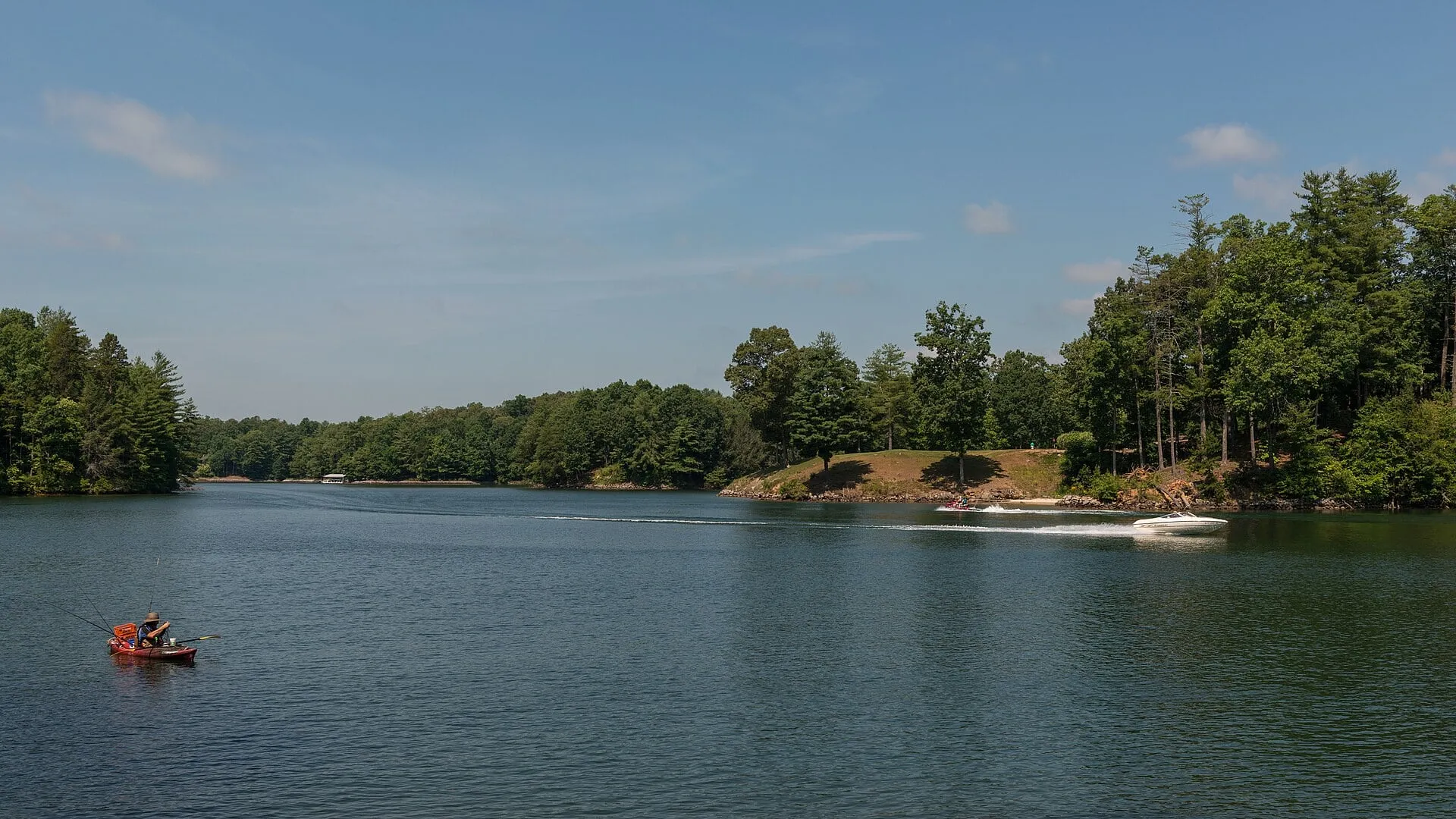
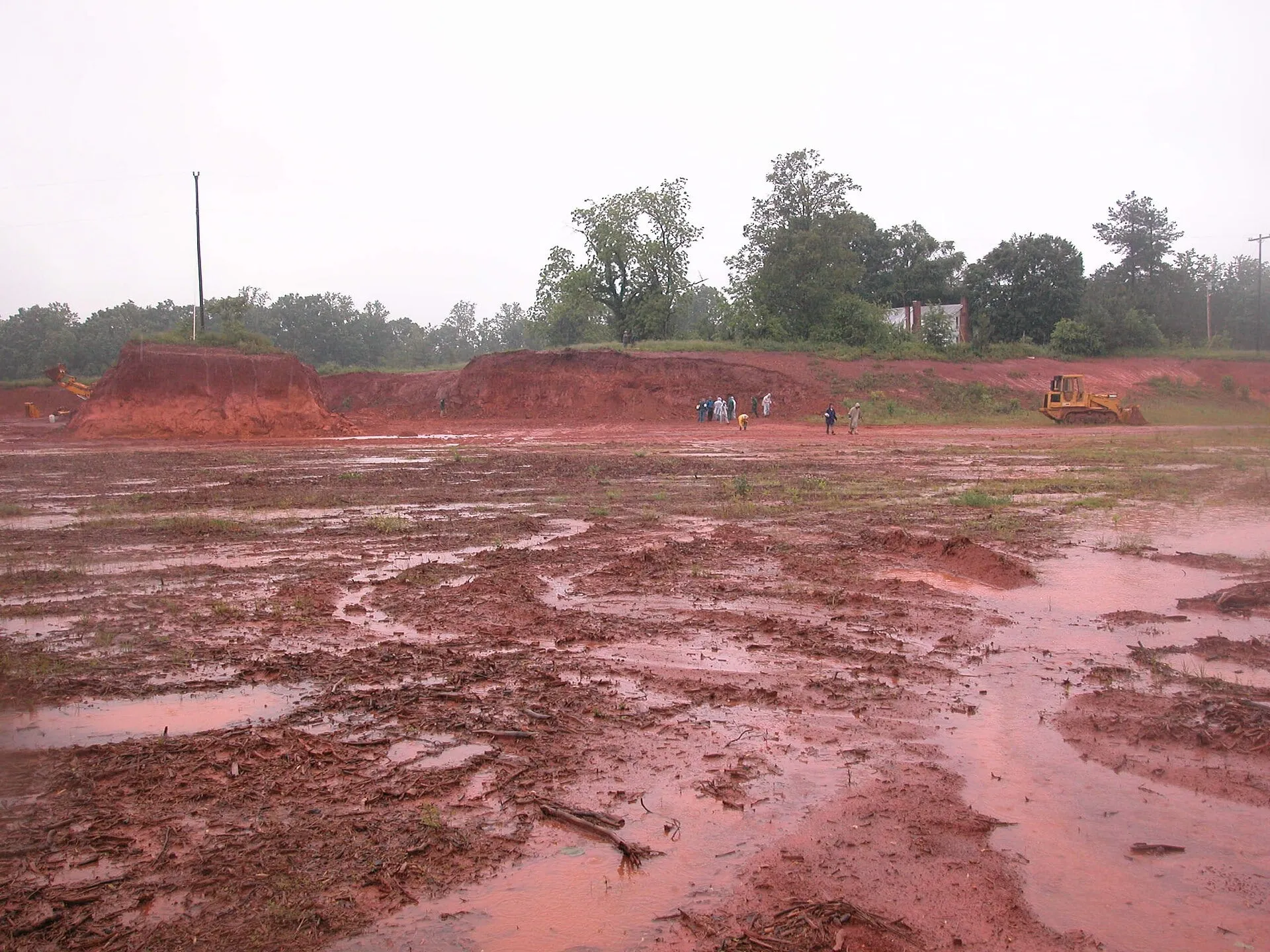
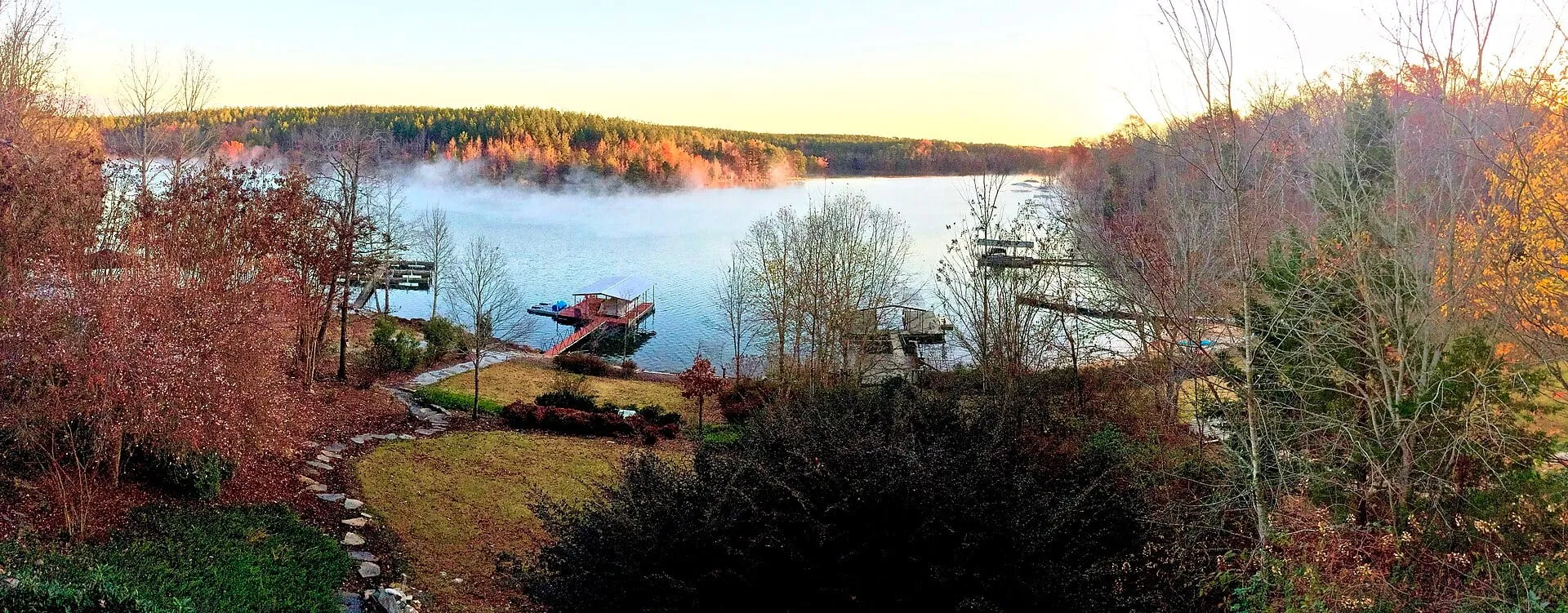
Lake Keowee stretches across Oconee and Pickens counties, from near Seneca north toward Salem. Most lakefront lots share the same traits: a slope from the road down to the water, red clay under the topsoil, and a dock, seawall or riprap at the bottom.
Stumps on these lots come from storm damage, trees that died or leaned toward the water, and space made for a house, patio or path. The trees are mostly loblolly pine mixed with hardwoods like oaks and tulip poplar.
Shoreline rules come first
Duke Energy manages the Keowee shoreline. It has rules about what can be cut or cleared near the water, and vegetation in the shoreline buffer may need approval before it’s removed. Many gated lake communities add their own architectural review on top.
Sort out approvals before booking. Our guide to lakefront stump grinding on Keowee and Hartwell explains what to ask, and why grinding is gentler on a slope than digging.
Docks, seawalls and riprap
Stumps near the water need a careful approach. Roots can be woven into riprap or run behind a seawall, and pulling them out could loosen the stone. Grinding takes the stump down without that pull, and roots that run under the wall can stay put.
Dock power, water lines and lighting are private runs. SC811 doesn’t mark private lines like these, so even though we request a locate for public utilities before grinding, you’re the one who knows where your dock power goes. Flag it, or mark it on a photo.
Steep access
The route from the road to the stump decides a lot. Stairs, narrow side yards, retaining walls and steep lawns all affect what can get down there. Photos from the top of the slope, and from the stump looking back up, tell us more than any description.
After grinding, cover bare clay quickly with the grindings, mulch or straw, and plant where you can. Bare clay on a lake slope washes into the cove fast.
Grindings and replanting
We rake grindings back into the hole by default. On a slope above the water, haul-off is often the better choice, so loose chips can’t wash down in heavy rain. If the ground-out spot sits inside the shoreline buffer, check what Duke Energy allows before replanting it as well.
What to tell us on your quote
- The distance from the stump to the water, seawall or dock.
- What the wall is made of, if there is one.
- Any approvals from Duke Energy or your community.
- Whether you’ll be there. If the stumps are marked and the gates are open, we can work while you’re away.
Nearby
We also cover Seneca and Salem, along with Six Mile on the Pickens County side. Get a quote with your photos and a rough measurement.