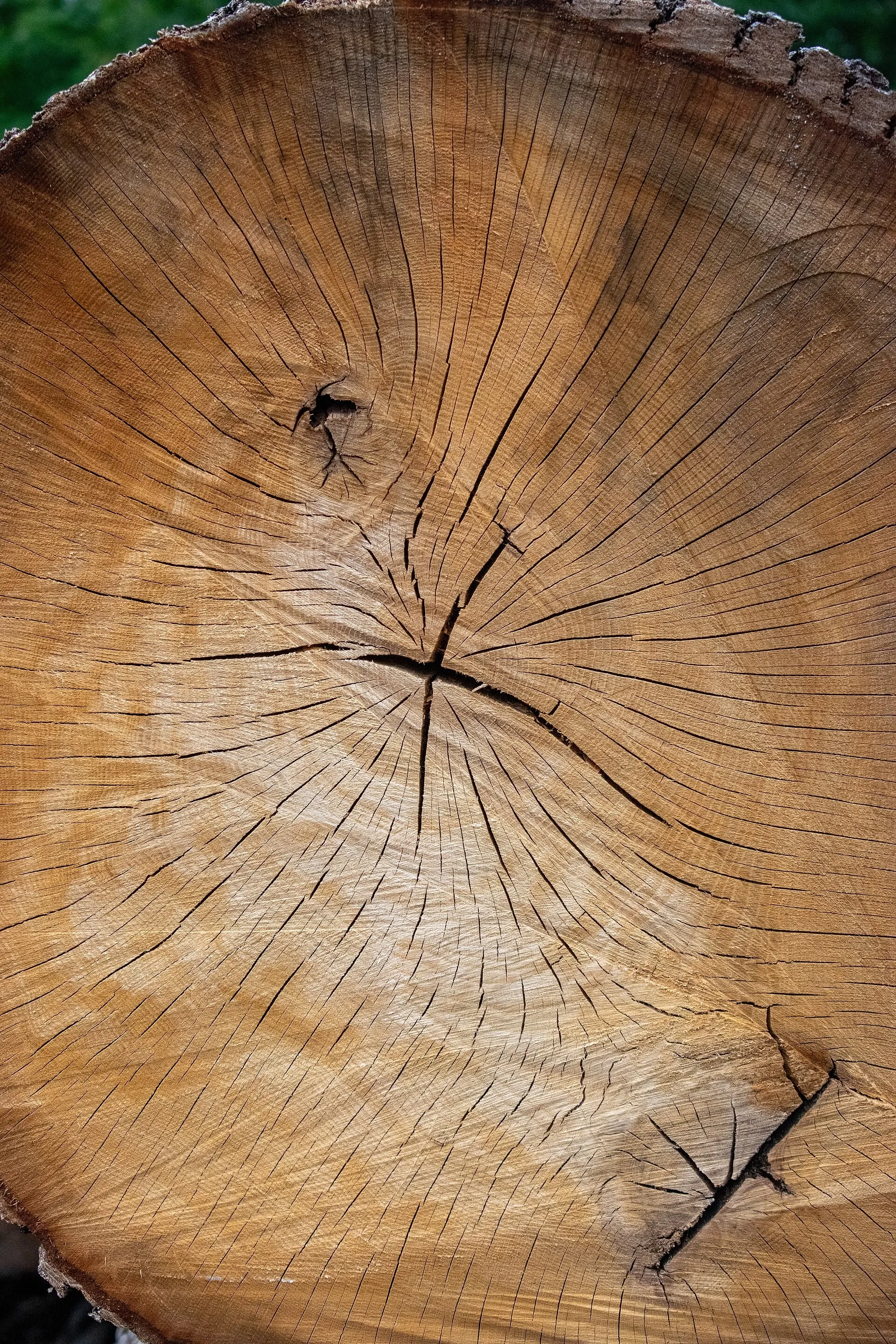
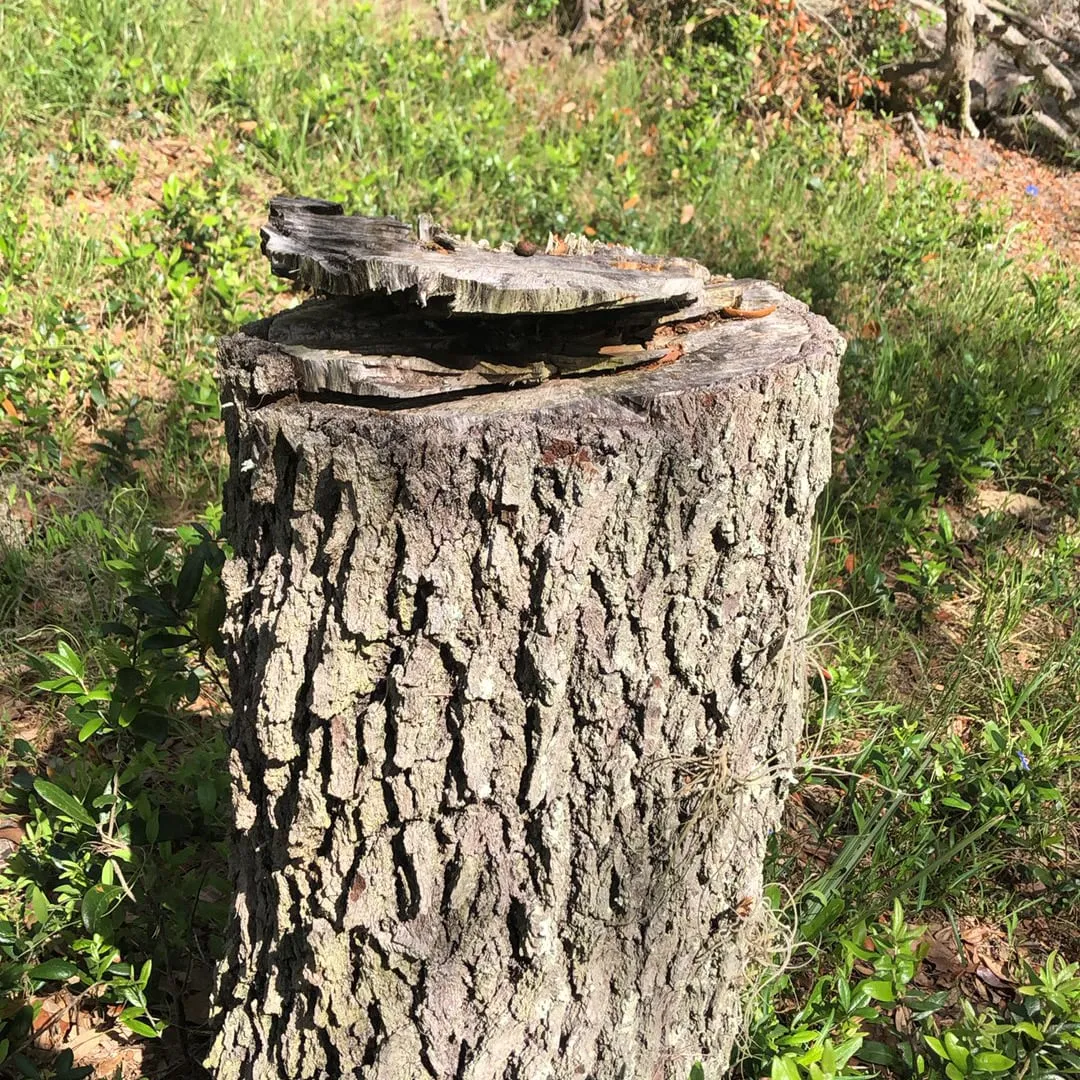
You don’t need anyone to come out and look at a stump to get a solid quote. Five minutes with a tape measure and your phone covers almost everything.
Here’s what to measure, what to note and which photos to take.
What you’ll need
- A tape measure. A long contractor’s tape is easiest, but a sewing tape or a piece of string works too.
- Your phone, for photos.
- Something to mark the stumps, like spray paint or garden flags, if there’s more than one.
Measure across the widest part
Measure the diameter: straight across the stump through the middle, at ground level. Find the widest line across the cut and use that number.
Stumps are rarely perfect circles. If yours is oval or lopsided, go with the longest measurement. That’s what most stump grinders price from.
If you only have a string, wrap it around the stump at ground level, measure the string and divide by 3.14. Dividing by 3 is close enough for a ballpark.
Include the root flare
Many stumps widen at the base where the trunk meets the roots. If that flare sits above the soil, it has to be ground too, so include it. Measure where the wood meets the ground, not higher up where the trunk is narrower.
For a tall stump, the measurement is still at ground level. Note the height separately, since a waist-high stump has more wood to remove than one cut flush.
Measure surface roots separately
If thick roots run out across the lawn, measure those on their own. Note roughly how many there are, how far they run from the stump and how thick the biggest one is. A quick photo with the tape laid alongside helps.
Root grinding is usually priced separately from the stump. Our surface root grinding page explains what’s involved.
Check the way in
The machine has to get from the street or driveway to the stump. Note:
- The narrowest gate or gap along the way, measured from post to post.
- Slopes and steps, and roughly how steep the ground is.
- Soft ground. Red clay can stay soft for days after rain.
- The distance from where a truck and trailer can park to the stump.
Gate width matters more than people expect. It decides which machine can reach the stump.
If the only way in is a side yard, look for anything that narrows it further, like a heat pump, a downspout, a hose reel or a low branch. A few inches can change the plan, so measure at the tightest point rather than at the gate alone.
Note what’s nearby
Look around the stump and note anything within a few feet:
- Fences, sheds and foundations.
- Sidewalks, patios, driveways and AC units.
- Irrigation heads and lines, landscape lighting and invisible dog fence.
- Septic tanks and lines.
- Private power runs to a shed, workshop, gate or dock.
We request an SC811 locate before grinding, which marks public utility lines. SC811 doesn’t mark private lines like irrigation, invisible dog fence, septic laterals or private electric runs. If you know where they go, flag them.
Take two photos
Two photos cover nearly every quote:
- Close. The whole stump, with the tape measure laid across it so the number is readable.
- Wide. From a few steps back, showing the stump, what’s around it and the route in.
Take them in daylight. If access is tight, a third photo of the gate or path helps. Pull back any grass or ivy hiding the base first, so the photo shows where the wood actually meets the soil.
Measuring several stumps
Number each stump and write a short list: size, tree type if you know it and where it is. Something like “1: 18 inches, oak, back corner by the fence.” Mark the stumps themselves with paint or flags to match.
That list keeps the quote accurate. It also means the stumps can be ground while you’re not home, as long as they’re marked and the gates are open.
Put the numbers in the estimator
Once you have your sizes, enter them in the estimator on our quote page. It gives a ballpark range as you go, and you can send your photos with the request. If you want to understand the number first, our guide to what stump grinding costs around Seneca breaks down what affects it.
If the spot is going back to lawn, our guide on what to do after stump grinding is worth a read before the day. When the measurements are done, get a quote.