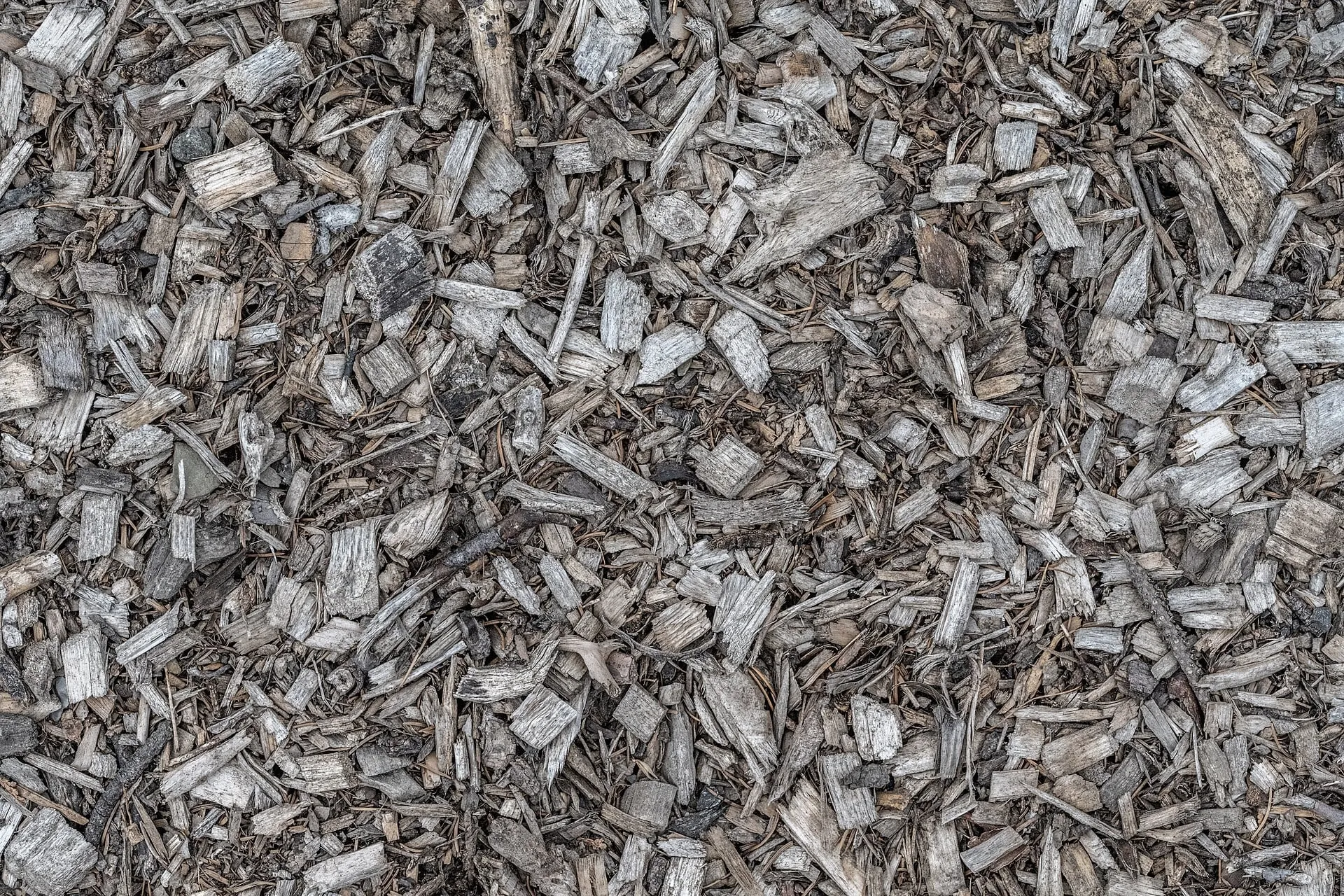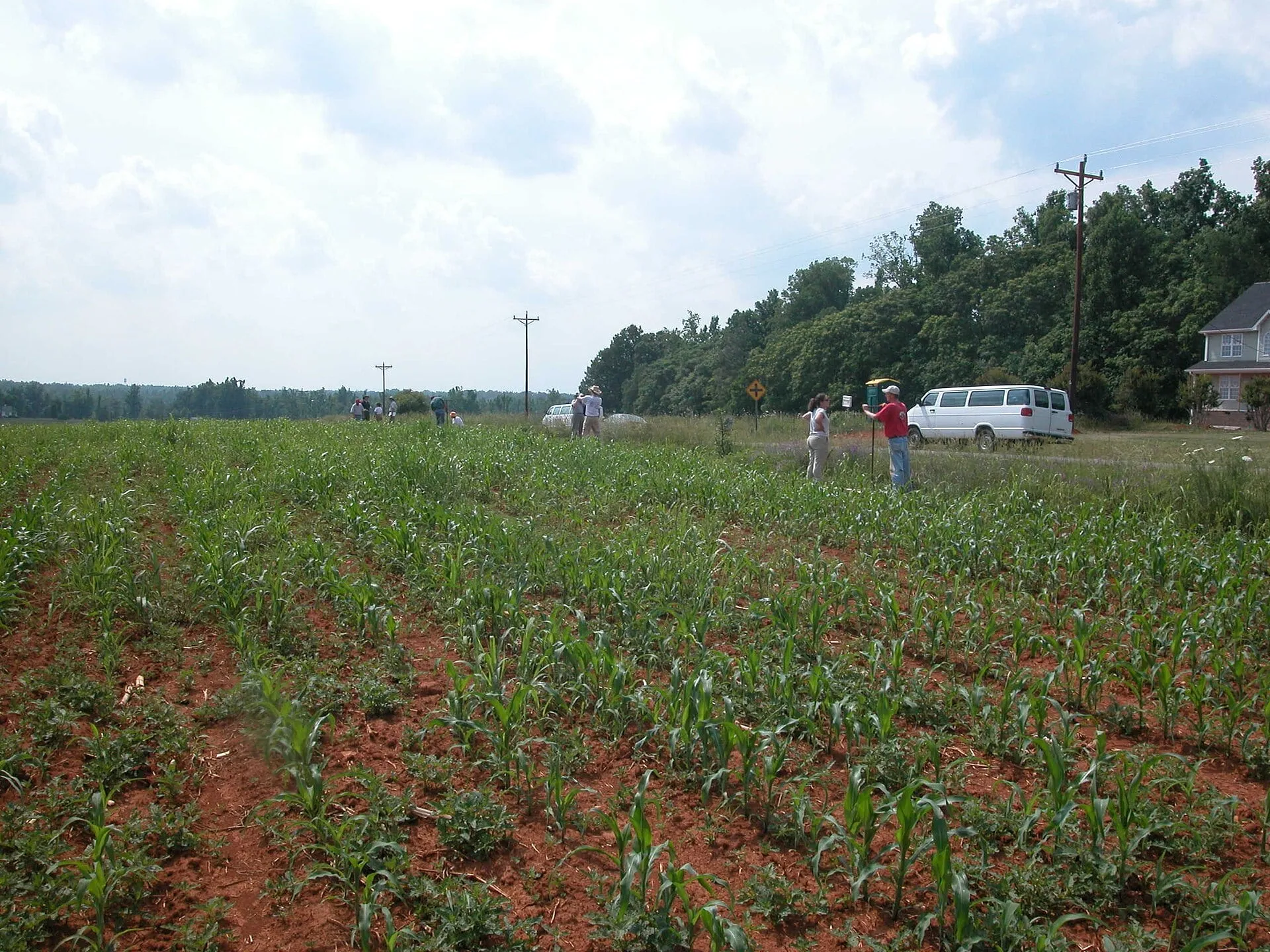
Once the grinder has gone, you’re left with a low mound of chips and soil where the stump was. What you do next depends on whether that spot is going back to lawn, into a bed or under a new tree.
Here’s how to handle it in Upstate yards, where red clay and our mix of warm-season and fescue lawns shape the timing.
Leave the grindings or remove them
By default, we rake the grindings back into the hole. That fills it and leaves a tidy surface on the day. If you’d rather have them gone, ask for haul-off when you request your quote.
If the spot is becoming a flower bed or a mulched area, leave the grindings where they are, or spread them around shrubs as mulch. If it’s going back to grass, plan to scoop most of them out of the top few inches and replace them with soil.
Why fresh chips and grass don’t mix
Fresh wood chips are rich in carbon. When they’re mixed into soil, the microbes breaking them down pull nitrogen out of the soil to do it. Grass and seedlings on top go pale and thin because they’re short of nitrogen.
On top of the soil as mulch, chips cause very little of this. Mixed into a planting hole, they cause a lot. That’s why the top layer should be soil, not grindings, wherever you plan to grow grass.
Fill the hole with topsoil
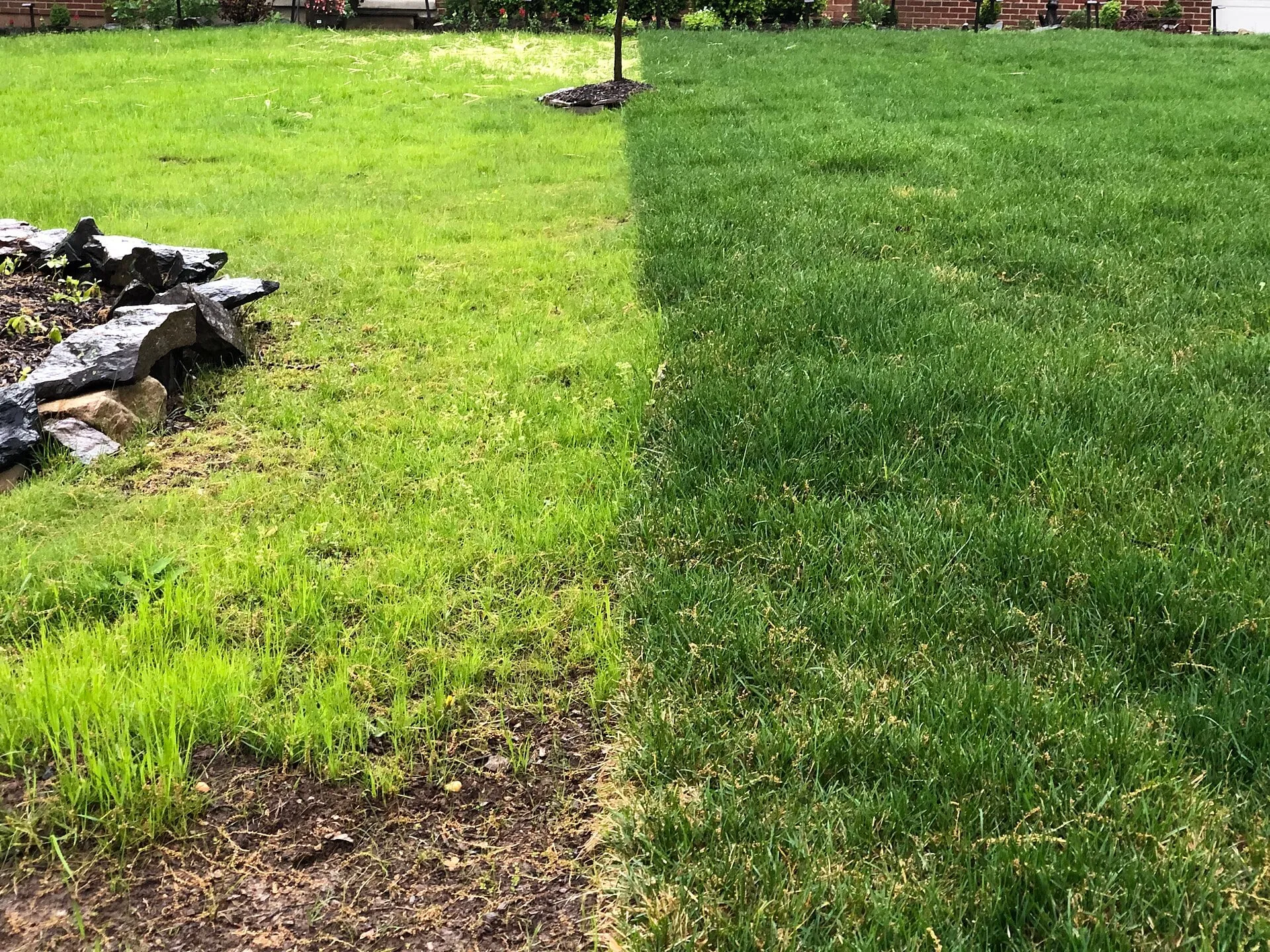
Dig out the grindings to a depth of 4 to 6 inches, or as deep as they go. Fill with screened topsoil, or topsoil blended with some compost. Upstate native soil is mostly red clay, which packs hard and drains slowly, so bought topsoil gives seed a better start.
Tamp it lightly with your foot or the back of a rake. Leave it mounded an inch or two above the lawn, because it will settle.
Expect some settling
The roots left underground rot over several years, and the buried grindings shrink as they break down. Low spots appear, sometimes months later. That’s normal.
Keep a bag of topsoil handy and top up the spot whenever it dips. A sunken patch is a twisted ankle or a scalped mower blade waiting to happen.
When to seed or sod in the Upstate
Timing matters more than anything else you do here. Clemson Extension’s Home & Garden Information Center publishes planting guidance for each lawn grass, and it’s worth checking before you buy seed.
Bermuda, zoysia and centipede
These warm-season grasses grow from late spring through summer. Plant once the soil has warmed and the lawn around the spot is fully green. Sod or plugs root in quickly in warm weather with regular watering.
Small patches in zoysia and centipede lawns are often easiest to fix with sod. You can buy a few pieces from a garden center or cut a piece from a hidden edge of your own lawn. Centipede prefers light feeding, so go easy with fertilizer on the patch.
Fescue lawns
Tall fescue is a cool-season grass, and in the Upstate it does best seeded in early fall. Spring seeding works as a second choice, but young fescue often struggles through its first hot summer. If your stump is ground in late spring, fill the hole now and seed in the fall.
Mushrooms and fungi
Buried wood feeds fungi, and within a few weeks or months you may see mushrooms over the old stump. They’re harmless to the lawn and a sign the wood is breaking down. If you have small children or dogs, rake them off as they appear.
If you’re still deciding what to do with other stumps on the property, our guide on whether to leave a stump to rot covers what happens when you don’t grind.
Planting a new tree
Plant the new tree a few feet to one side of the old stump, outside the ground-out area. The old spot is full of decaying roots and chips that settle unevenly and don’t hold water the way soil does.
If the new tree has to go in the same spot, ask for a deeper grind and replace the grindings with soil. Choose a tree suited to the space and to Upstate clay, so the next one doesn’t outgrow its spot.
If sprouts or roots come back
Some trees don’t give up easily. Sweetgum and tree-of-heaven are known for sending up root suckers after the trunk is gone. Cut them off at ground level as they appear, and they usually weaken over a season or two.
Thick roots left across the lawn are another matter. If they’re catching the mower, surface root grinding takes them down below grade. For more on what grinding leaves underground, see stump grinding vs stump removal.
Still have stumps to deal with? Get a quote with a photo and a rough measurement.