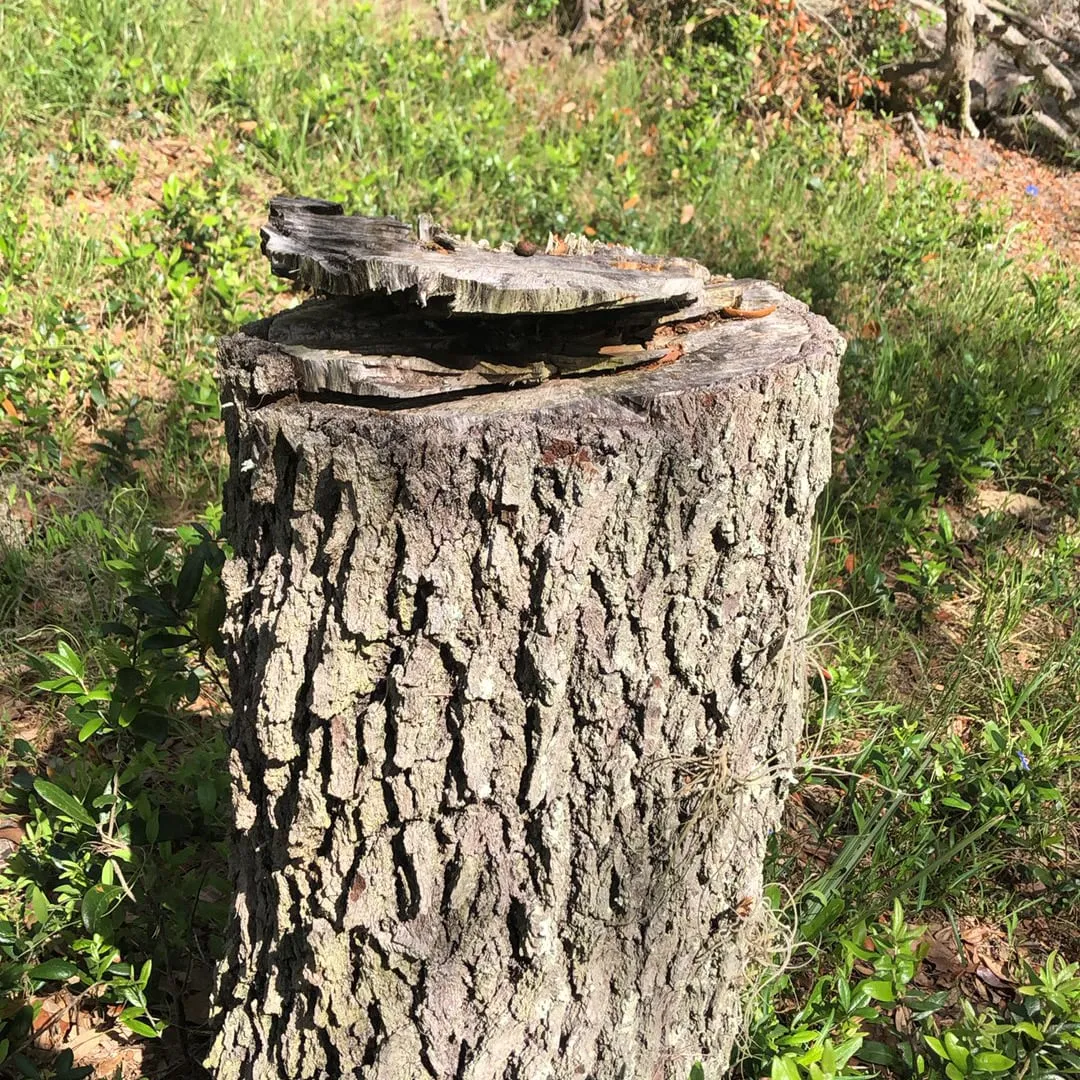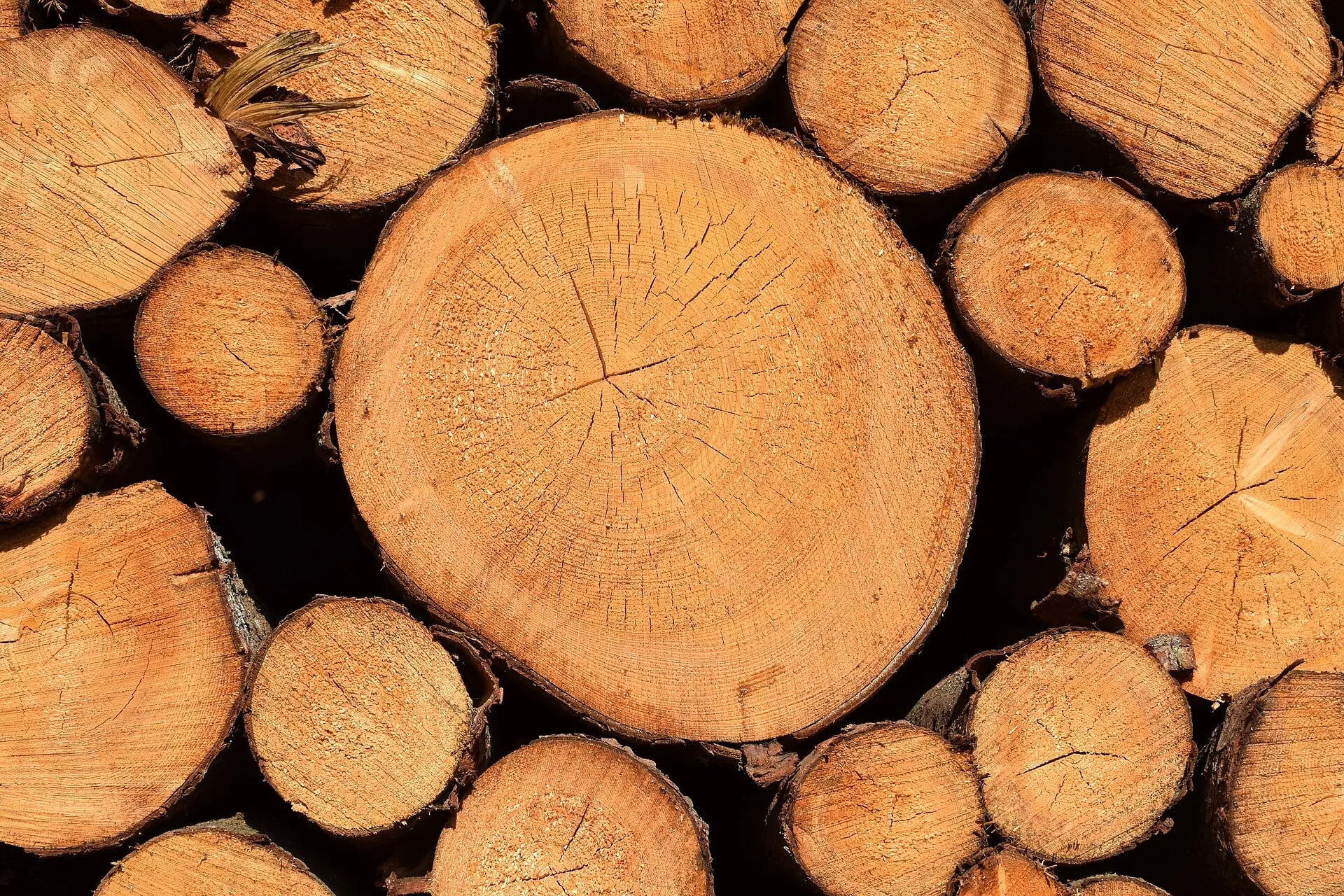
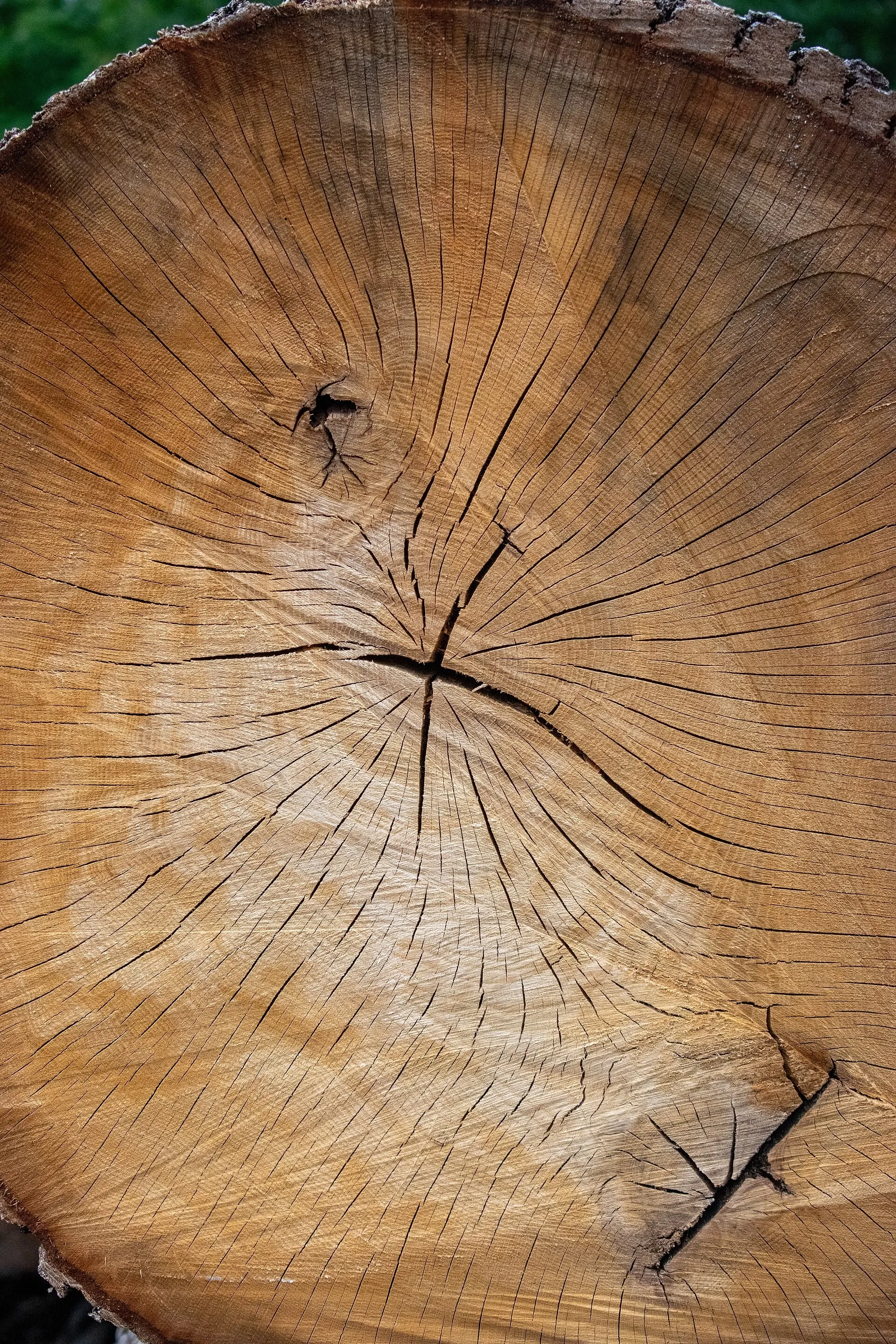
Leaving a stump to rot costs nothing up front, and in the Upstate’s warm, humid climate, rot does eventually win. The question is how long it takes and what moves in while you wait.
Here’s a realistic look at what happens to a stump left in an Upstate yard, and when leaving it alone is a perfectly good choice.
How long a stump takes to rot
Expect years, not months. Decay is fastest in warm, damp conditions, which our summers provide, but even here a stump takes a long time to break down.
Pine goes faster than oak. The outer sapwood of a loblolly pine stump can be soft and crumbly within a few years, though the resin-rich center holds on longer. Dense hardwoods like white oak and red oak can stay solid enough to trip over for a decade or more.
Size matters too. A wide stump has a lot of wood above ground and a lot of root mass below it. A stump in shade on moist ground rots faster than one baking in full sun on a dry slope.
Termites and carpenter ants
Eastern subterranean termites are common across South Carolina, and dead wood in contact with soil is exactly what they eat. A stump at the back of the property is not much of a worry. A stump a few feet from your foundation puts a food source right next to your house.
Carpenter ants don’t eat wood, but they nest in wood that’s already gone soft. A rotting stump near the house can host a colony that later wanders indoors. If you see either near your home, have a licensed pest control company take a look.
Fungi and mushrooms
Fungi do most of the work of breaking a stump down, and mushrooms around the base are part of that. Most are harmless to the yard.
Some root-rot fungi, including Armillaria, can use an old stump as a base and spread to nearby trees and shrubs. If you see clusters of honey-colored mushrooms at a stump and plants nearby are declining, ask an arborist or Clemson Extension for advice.
Sprouts and suckers
Many trees try to grow back. Red maple and Bradford pear commonly sprout from the cut, and sweetgum and tree-of-heaven are known for sending up suckers from their roots, sometimes several feet from the stump.
Left alone, those sprouts turn into a thicket that’s harder to deal with than the original stump. Grinding removes the root crown, where most sprouting starts. Root suckers can still pop up for a season or two afterward, but they usually weaken once they’re cut back.
Mower and trip hazards
A stump cut close to the ground disappears in tall grass. It’s easy to catch with a mower deck or a string trimmer, and easy for a child or a guest to trip over. On a rental, it’s one more thing for a tenant to complain about.
Chemical stump removers
Most stump removers sold in hardware stores are granules you pour into holes drilled in the top of the stump. The idea is to speed up decay, or make the wood soft enough to break apart or burn. In practice they take months, and a big hardwood stump may barely change in the first season.
Burning a treated stump is slow and smoky, and the fire can smolder down into the roots. If you’re thinking about it, check with the SC Forestry Commission and your town or county first, and never try it near the house or other trees.
When leaving it is fine
Not every stump needs grinding. Leaving one is reasonable when:
- It’s at the edge of the woods or deep in the back of acreage.
- It’s well away from the house, deck and outbuildings.
- It’s not in a mowing path, a play area or a walkway.
- You’re happy to cut back any sprouts for a few years.
Old stumps also give woodpeckers, beetles and other wildlife food and shelter, and some people turn them into a base for a planter. That’s a fine use for a stump that’s out of the way.
A middle path
Plenty of people grind the stumps that matter and leave the rest. Grind the ones in the lawn, near the house and along paths, and let the ones at the woods line rot on their own. On a big property, our multi-stump and lot clearing page explains how larger jobs are handled.
To compare the options, see stump grinding vs stump removal and what stump grinding costs around Seneca. When you’ve decided which stumps should go, get a quote.